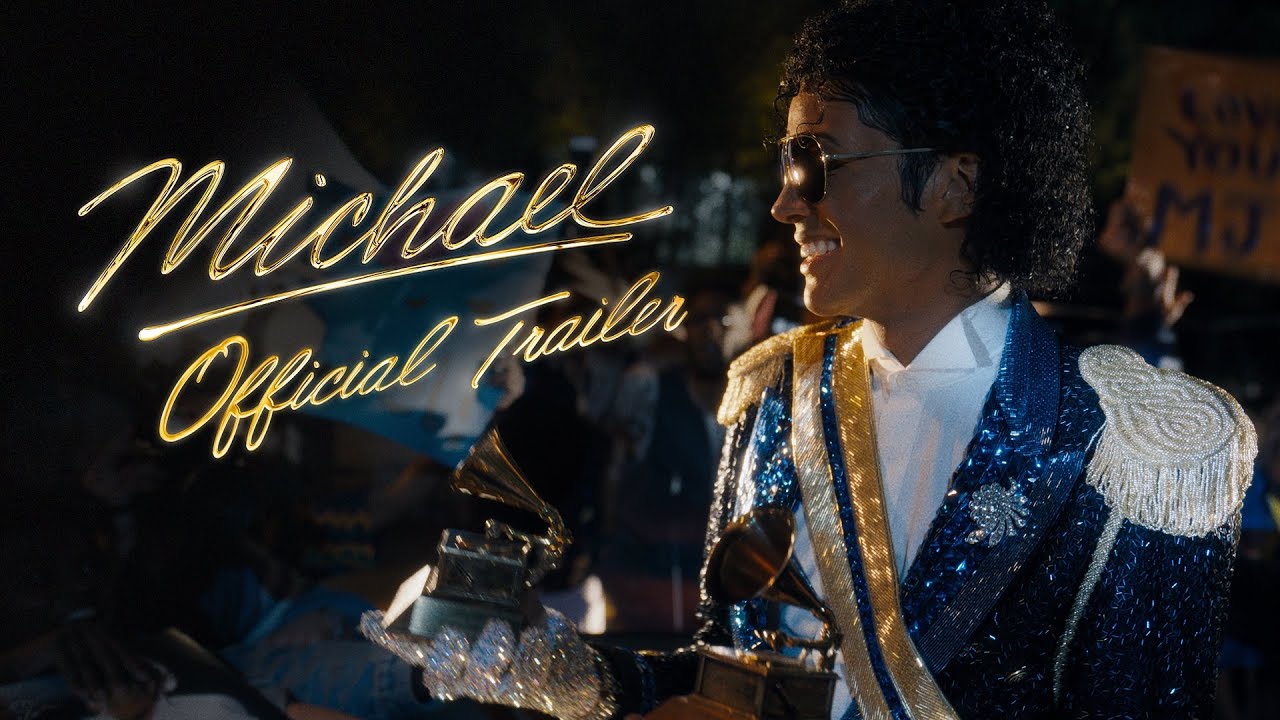
This isn’t just a film—it’s a full-scale cinematic experience. I expected another polished music biopic… but somewhere between the stadium riots, the Berlin Wall imagery, and that haunting final performance, this thing became something far bigger.

And honestly? I wasn’t ready for how intense it gets.

A Spectacle Worth Watching on the Big Screen
Some movies tell a story. This one feels like it’s trying to capture a phenomenon.

Set during the peak of Michael’s worldwide dominance, the film follows the impossible pressure of becoming more than human in the eyes of millions. From Eastern Europe to massive sold-out arenas, the scale here is enormous—sometimes almost overwhelming in the best possible way.
Jaafar Jackson doesn’t simply imitate. That would’ve been the easy route. Instead, he channels the strange mix of charisma, fragility, fear, and myth that made the character feel untouchable… and deeply isolated at the same time.
And then the film starts pulling you into darker territory.
Slowly. Quietly.
Until everything changes.
Why This Feels Bigger Than a Traditional Music Biopic
Most music films follow a predictable formula:
- Rise to fame
- Personal struggles
- The comeback moment
This one aims for something more mythological.
The “Living God” angle could’ve felt ridiculous. Somehow, it works.
The film constantly frames Michael as both a global icon and a prisoner of his own image. Entire cities shut down when he appears. Crowds scream like they’re witnessing something supernatural. Politicians, media figures, security teams—everyone reacts to him like he’s beyond human.
But here’s what most people will miss:
The movie isn’t celebrating celebrity culture. It’s questioning it.
That tension becomes the emotional engine driving the entire story.
The Scene That Stole the Show
There’s a sequence in Bucharest that absolutely floored me.
No spoilers.
But the combination of military-inspired staging, flashing camera lights, deafening crowd noise, and complete emotional silence from Michael himself creates one of the most unsettling moments I’ve seen in a modern blockbuster.
You’re watching someone adored by millions… while simultaneously collapsing under the weight of it.
And visually?
It’s stunning.
The gold shin guards. The command-style costumes. The giant floodlights cutting through smoke like a war zone. Every frame feels designed for the biggest screen possible.
What Jaafar Jackson Brings to the Role
Let’s address the obvious question.
Yes, the resemblance is uncanny.
But what surprised me most wasn’t the dancing or vocal mannerisms. It was the stillness.
Jaafar understands how to make silence uncomfortable.
Some of the film’s best moments happen when he says absolutely nothing. A stare backstage. A tiny nervous gesture before performing. A smile that disappears half a second too early.
That’s the kind of detail that elevates a performance from imitation into something genuinely compelling.
Strengths That Make This Film So Powerful
- Massive cinematic scale: The stadium sequences feel enormous without becoming visually messy.
- Emotional tension: Fame is portrayed as both addictive and terrifying.
- Outstanding production design: The military-pop aesthetic gives the movie a unique identity.
- Strong lead performance: Jaafar Jackson carries both the spectacle and vulnerability surprisingly well.
- Unexpectedly dark atmosphere: Certain scenes feel more psychological thriller than musical drama.
Where The Film Struggles
It’s not perfect.
The pacing in the middle section occasionally slows down when the movie becomes too focused on symbolism instead of character interaction.
There are also moments where the script leans a little too hard into making Michael appear almost superhuman, which creates emotional distance during a few key scenes.
And some supporting characters definitely deserved more development.
Still… when the film hits emotionally, those flaws become easy to overlook.
What Viewers Are Saying
- Daniel Brooks: “I expected nostalgia. I didn’t expect something this emotionally heavy.”
- Sophia Turner: “The stadium scenes genuinely gave me chills.”
- Marcus Hale: “Jaafar Jackson absolutely disappears into the role.”
- Emily Carter: “This felt less like a movie and more like witnessing history unfold.”
- Ryan Mitchell: “That Bucharest sequence? Unreal. Easily the best scene in the entire film.”
- Olivia Bennett: “The costumes, lighting, music… everything felt massive.”
- Kevin Ross: “I didn’t think a music biopic could feel this intense.”
- Natalie Greene: “There’s something haunting underneath all the spectacle.”
Final Verdict
This film swings for greatness.
Sometimes wildly. Sometimes imperfectly.
But when it works, it becomes unforgettable.
What stayed with me wasn’t the music or the giant performances. It was the loneliness hidden underneath all the screaming crowds. The idea that becoming an icon might slowly erase the person underneath.
That’s the part that lingers after the credits roll.
And honestly… that’s what makes this feel bigger than a standard Hollywood music drama.
It feels like the story of a man becoming mythology in real time.
Frequently Asked Questions
Is this movie worth watching in theaters?
Absolutely. The sound design and large-scale concert sequences were clearly made for the big screen experience.
Does Jaafar Jackson actually perform well?
Yes—and surprisingly well. Beyond the resemblance, he brings emotional depth and subtle vulnerability to the role.
Is the film mostly about music performances?
No. While the performances are massive, the movie focuses heavily on fame, pressure, isolation, and public obsession.
Does the movie feel overly dramatic?
At times, yes. But the heightened tone actually fits the larger-than-life story the film is trying to tell.
Can casual viewers enjoy it without being longtime fans?
Definitely. Even people unfamiliar with the deeper history will probably connect with the emotional and cinematic spectacle.